
QUOTES
Insights, ideas, and strategic perspectives shared by leaders across the CAIO Circle
Insights, ideas, and strategic perspectives shared by leaders across the CAIO Circle

AI is becoming the new business operating system, and the opportunity to guide organizations through this transformation is both inspiring and consequential


True innovation in AI doesn't come from replacing human judgment, but from amplifying it-adopting AI to unlock new heights of ingenuity and impact.
AI does not replace jobs. It replaces tasks. However as we replace more and more tasks, AI will necessitate a fundamental reimagining of the process/system context and will transform the job content of the humans in the loop. So while AI may or may not replace jobs, it will absolutely change them. So, it's important to look beyond task automation when implementing AI.

Companies that do not build a strong data infrastructure to support current AI use cases focused on "Efficiency" will likely fall behind when more advanced AI use cases that can provide a "competitive" advantage become available.

AI's true value goes beyond productivity-it's about driving top-line growth. The real winners, like Thomson Reuters and Adobe, aren't just optimizing with AI; they're generating revenue by solving the last-mile challenges of governance, reliability, and strategic alignment-turning potential into profit.

AI Agents turn continuous deployment from automation into intelligence - they watch for issues, learn from every release, and make sure new updates reach users safely and seamlessly.

In response to the rapid advancement of AI Technology, organisations must strike a strategic balance: exploring promising emerging technologies while maintaining laser focus on deploying AI solutions that address most pressing & relevant business challenges. This dual approach will not only mitigate competitive risks but position organisations to capture significant market opportunities that drive sustainable growth and shareholder value.

Every failed AI project is a governance failure in disguise. The companies that truly understand this aren't merely avoiding fines and liability-they're transforming sceptics into advocates and converting distrust into competitive advantage. Trust is the new oil, and governance is how you extract it.

The danger is not that AI becomes too smart, but that we stop being curious. Just as people forget how to navigate when they solely rely on their GPS, over-reliance on AI risks making us collectively less capable.
Cloud is the foundation. DevSecOps is the engine. AI is the compass. Together, they power secure, intelligent innovation at enterprise scale.

To unlock scalable innovation, organizations must embrace AI maturity models-not just as frameworks, but as compasses. The real challenge lies in balancing the momentum of quick wins with the foresight of long-term strategic investments. Generative AI, when applied to large-scale industries, isn't just transformative-it's catalytic.

Integrating Generative AI into enterprise effectively requires a strategic, ethical, and adaptable approach, focusing on business goals, cultural readiness, and continuous learning, not just the technology itself.
AI should be built with clarity, conscience, and care. A well-governed model begins with clean data, human oversight, and a deep respect for privacy. Without these foundations, even the smartest AI can become unstable like a house without pillars.

The future of AI isn't just about intelligence- It's about integrity guided by human values
Modern enterprises must recognize that true digital transformation follows a layered architecture-from running the business through core source systems, to managing it via structured data and semantics, and ultimately automating it through the knowledge layer. This top layer, empowered by AI, enables organizations to derive actionable intelligence, closing the loop between insight and execution.

With AI, knowledge has become cheap. What matters now is wisdom - the creativity and judgment to use knowledge in ways that truly move us forward.

Dark data is the only asset that costs you money to keep and costs you more the day you finally need it. AI is the first technology that turns that liability into leverage reading, connecting, and surfacing what you've been paying to ignore.
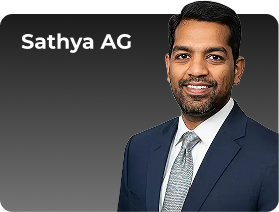
Generative AI provides enterprises with a powerful, high-performance engine. But that power quickly dissipates without traction. The true competitive moat lies in designing the vehicle - one engineered from unique workflows and fueled by proprietary data. This is what allows an enterprise to harness that power, gain ground, and accelerate past the competition.
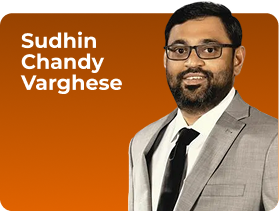
Adopting AI is not the goal - it's a means to an end. The real goal is to solve critical problems, create meaningful value, and most importantly, improve the end-customer experience and satisfaction.

From my experience talking with customers across many industries—and from the feedback we've consistently heard in similar executive events—peer circles are one of the highest-leverage investments a CAIO can make: a trusted forum to compare notes, pressure-test governance, and accelerate the path from pilots to enterprise-scale impact.

AI delivers its greatest impact when it enables people to work with sharper clarity, faster execution, & deeper insight, accelerating decision making & reducing the burden of routine work. This increased speed to value, combined with stronger human judgment & creativity, translates directly into a sustained competitive advantage. At its best, AI expands what teams can achieve by driving better outcomes, enabling smarter decisions, & creating more meaningful impact across the organization.

Real AI value emerges when intelligence is embedded into core enterprise platforms-where data, content, and workflows converge to improve decisions at scale.

The greatest risk today isn't technology failing; it's people being left behind. Sustainable transformation requires democratizing access to AI so every employee can amplify their skills, judgment, and unique human contribution.

AI doesn't replace thinking. It raises the bar and shifts the focus to better judgment, clearer decisions, and stronger outcomes.

Trust in AI isn't earned through sophistication alone—it's built through transparency, consistency, and accountability. When people understand how a system works, see that it behaves reliably, and know there are safeguards when it doesn't, trust follows. The future of AI won't be defined by what it can do, but by how responsibly it does it.

As autonomous agents take on complex workflows, our governance must evolve from managing tools to managing intent. True leadership means ensuring that every automated action remains accountable to human values, preventing speed from outpacing safety.

The future of work is not about replacing humans, but reimagining what is possible when human creativity meets machine scale. Our mandate is to build inclusive pathways that elevate the entire workforce to solve challenges neither could tackle alone.

We are moving beyond simple automation to a new era of generative intelligence that reshapes how we create value. The winners will be those who stop viewing AI as a software upgrade and start redesigning their entire business logic around it.

The next era of enterprise transformation will be defined not just by the systems we implement, but by the intelligence we embed. Organizations that build trusted data foundations and operationalize responsible AI will be best positioned to drive innovation, agility, and long-term value.

Speed without judgment is just risk moving faster. AI agents accelerate the pace of change; the critical decisions still go through a person